

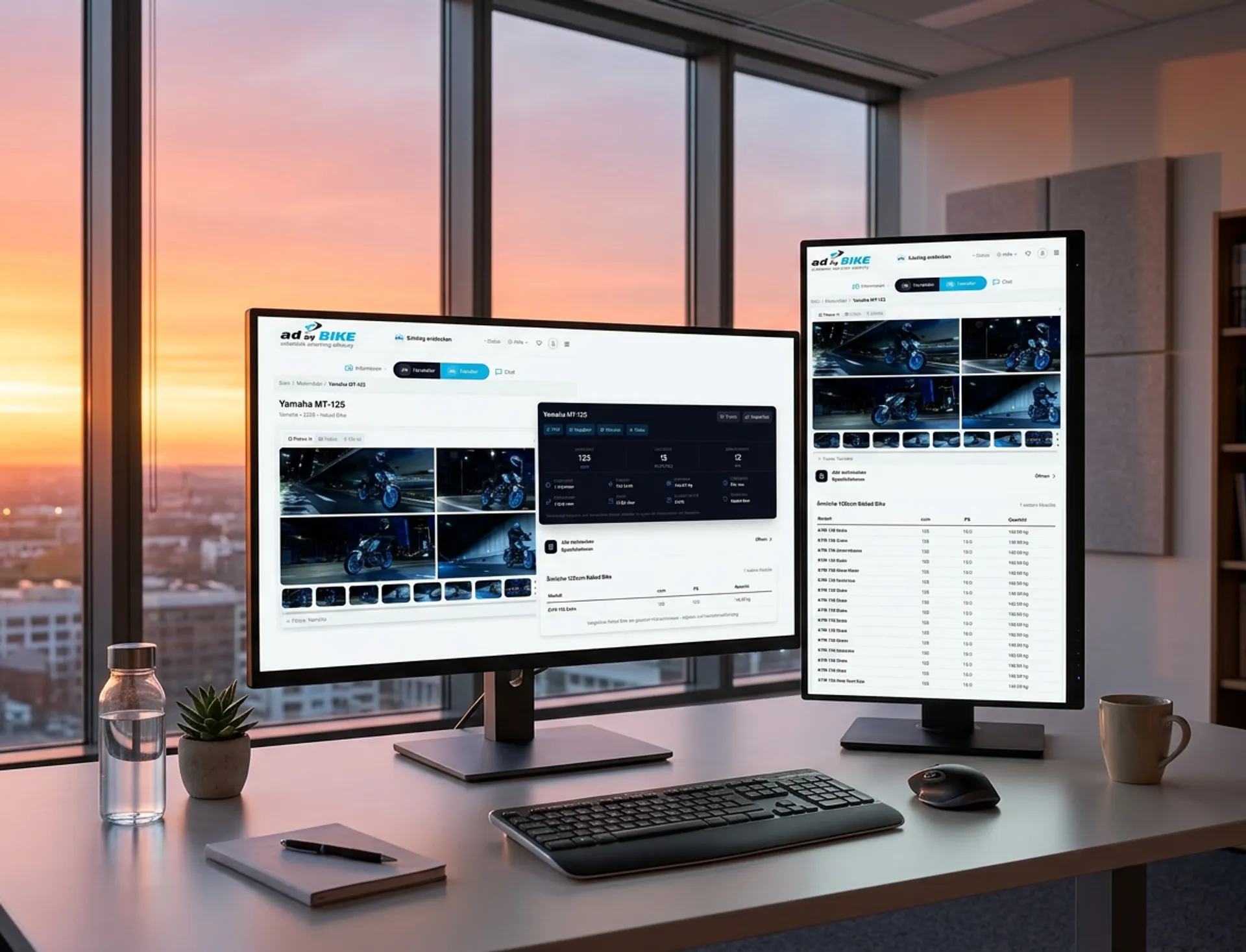
Admybike didn’t start with a business plan. It started with an observation: motorcycle dealers work with systems that weren’t built for them. Standard websites, generic plugins, copy-paste solutions. The result? Sites that look like everyone else’s.
The Origin
It didn’t start with the desire to build a portal. It started with an observation: motorcycle dealers in the German-speaking region work with systems that weren’t built for them. Standard websites, generic plugins, copy-paste solutions.
The result: sites that look like everyone else’s. Features nobody needs. And workflows that cost more time than they save.
The Problem
Motorcycle dealers aren’t IT experts. They’re hands-on people. They want to sell, advise, wrench. But the digital tools available to them don’t understand their world.
A vehicle inventory is not a blog post. An inquiry is not a contact form. A dealer doesn’t need a gallery – they need a system that understands their vehicles, categorizes them, makes them comparable.
The Thought Process
Before the first line of code was written, there was thinking. What does a dealer really need? What data matters? What does the sales process look like? Who are the users – and what do they expect?
The result wasn’t a requirements document, but an understanding. A mental model of how a motorcycle dealer works, thinks, and makes decisions.
Why Admybike Is More Than a Website
Admybike is not a theme. It’s not a plugin. It’s a system that contains domain knowledge:
- Manufacturers, models, model years – structured and interconnected
- Vehicle data as a real database, not as posts
- Search logic that understands what a user is looking for
- Dealer areas with their own logic and access control
It understands the difference between a “used” vehicle and a “demo.” It knows that an enduro is not a supermoto. It thinks along.
Conclusion
Admybike didn’t come about because someone wanted a portal. It came about because someone truly understood a problem – and was willing to solve it properly.